Pakistan is already paying for the Gulf escalation at the pump and the kitchen. About 70 per cent of the country’s LPG is imported, and the 12kg cylinder that sold for about Rs4,500 in mid-October jumped to about Rs7,000 within days of Pakistan closing its Gabd-Rimdan and Taftan crossings with Iran on 17 October, traders told Reuters — a rise of about 56 per cent. The official OGRA price for November is Rs294.07 per kg, or Rs3,470.09 for an 11.8kg cylinder, but open-market prices run far higher: Rs520–580 per kg in Karachi and Lahore, up to Rs700 in Balochistan and Rs750 in parts of Khyber Pakhtunkhwa, while the Pakistan Bureau of Statistics put the national average for an 11.67kg cylinder at Rs6,497.89 in the week ending 5 November, up almost 115 per cent on a year earlier. Lahore rickshaw drivers say their daily earnings have fallen from Rs1,800–2,000 to Rs700–800, and families in Rawalpindi are returning to firewood, coal and kerosene as piped gas runs barely six hours a day.
The government moved on 4 November, when the federal cabinet approved selling 90 per cent of locally produced LPG through open auctions, with 10 per cent reserved for remote areas, and brought four state enterprises — PSO, Pakistan LNG Ltd, SSGC-LPG and Parco-LPG — back into LPG imports, with offers already received from Saudi Arabia and Oman. Prime Minister Shehbaz Sharif told the cabinet the government was making all-out efforts to ensure uninterrupted LNG, LPG and oil supplies through the winter, with energy requirements reviewed every two to three days, and directed LPG at Rs300–350 per kg for vulnerable consumers under BISP criteria. The planned nationwide LPG marketers’ strike for today, 16 November, was called off on 9–10 November after the association met Sindh Governor Nehal Hashmi, who assured them their concerns would be taken to the federal ministry. Petroleum Minister Ali Pervaiz Malik says November’s supply is fully covered and steps have been directed for December–January supplies.
The escalation itself reached a new pitch on Sunday. Iran’s Islamic Revolutionary Guard Corps said six of its drones targeted the US air-defence radar at the Al-Riffa helicopter base in Bahrain, in retaliation for “hostile US actions”. Bahrain’s Defence Force said its air defences intercepted and destroyed several Iranian aerial attacks before they reached their targets, and its Foreign Ministry condemned a “resumption of Iran’s aggression”. Sirens and explosions were heard in Bahrain at about 04:00 local time, with a second series around 06:30, and the Interior Ministry issued two security alerts telling residents to stay calm and move to a safe location. No damage or casualties have been confirmed, and no US or Bahraini authority has confirmed the radar was hit. It was the second such claim in three days: on Friday the IRGC said it had destroyed a US early-warning radar in Bahrain, while US Central Command said it shot down two Iranian drones, with no casualties or damage. Bahrain hosts the US Navy’s Fifth Fleet.
In the early hours of Sunday, the Saudi-led coalition said its air defences intercepted and destroyed two ballistic missiles launched toward Riyadh, and reported drones intercepted over the Eastern Province. The Houthis later claimed they had fired two ballistic missiles at King Khalid International Airport and a financial centre in Riyadh and called the operation a success, and claimed six more missiles at Saudi forces at Qa’wa camp in southern Yemen. No Saudi confirmation of any hit and no damage or casualties have been reported, and neither side’s damage claims have been independently verified. Since September, 26 people have been killed in attacks on the kingdom, 23 of them in strikes on airports, according to a Saudi official tally.
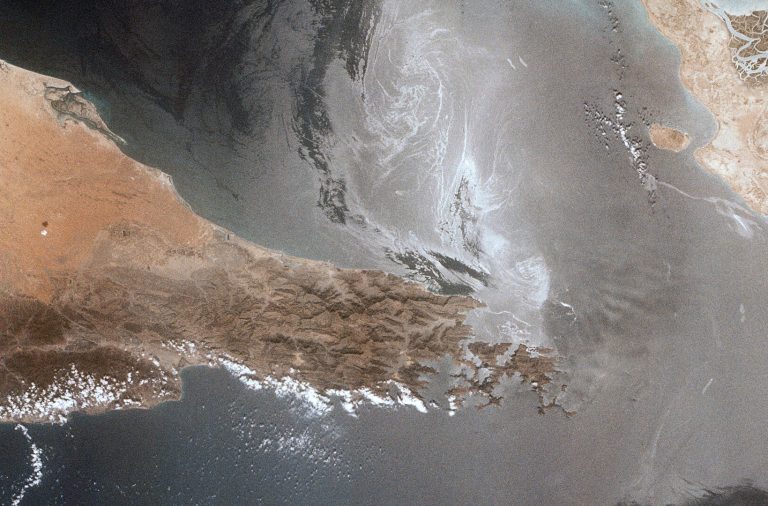
The Houthis also gained ground at the southern end of the Red Sea on Sunday, when Yemen’s Southern Armed Forces announced a redeployment from Dhubab Airport and the Bab el-Mandeb area toward Aden, leaving the Iran-aligned Houthis in control of the ground overlooking the strait. The government calls it a redeployment, not a withdrawal, and no closure of the waterway has been announced — it remains open to commercial shipping, with no attacks on shipping in the Red Sea since 24 August. The US-Israeli war on Iran began on 28 February, and Iran is estimated to retain 1,500–2,500 missiles despite months of strikes. Its chief negotiator, Mohammad Bagher Ghalibaf, says Tehran has sent seven conditions via a Qatari mediator, including lifting the US naval blockade and formally declaring the war over.
Sources:
Tribune (Reuters) — https://tribune.com.pk/story/2640416/bahrain-issues-first-threat-alerts-since-september-as-iran-says-it-attacked-us-base
Al Jazeera — https://www.aljazeera.com/news/2026/11/15/iran-says-it-targets-us-radar-in-bahrain-what-do-we-know
Arab News — https://www.arabnews.pk/saudi-arabia/coalition-forces-intercept-2-houthi-missiles-targeting-riyadh-3-drones-in-eastern-province-3007072
The National — https://www.thenationalnews.com/news/mena/2026/11/15/southern-yemeni-forces-withdraw-from-area-near-bab-al-mandab/
Pakistan Today — https://www.pakistantoday.com.pk/2026/11/08/govt-shifts-domestic-lpg-sales-to-auctions-to-curb-price-distortions-ensure-fair-supply
Dawn — https://www.dawn.com/news/2043371
Dawn — https://www.dawn.com/news/2041874/govt-assures-public-of-meeting-winter-gas-demand-hints-at-good-news-for-fuel-prices
U.S. Navy photo by Mass Communication Specialist 3rd Class Jonathan Clay, public domain, via Wikimedia Commons