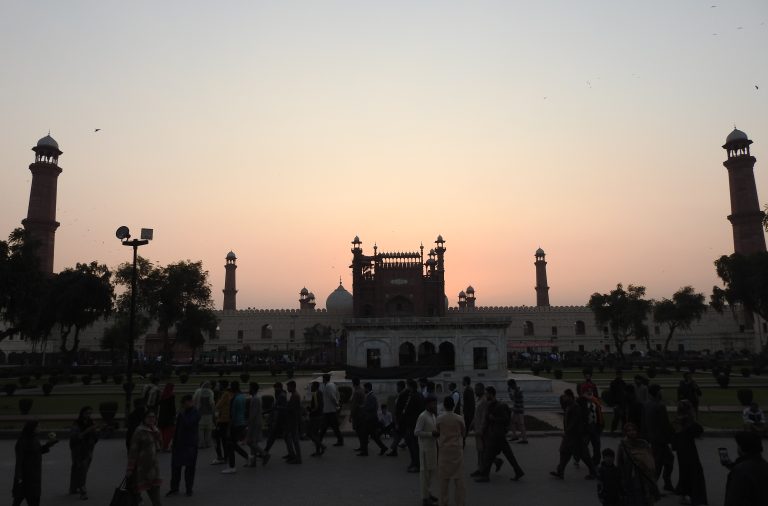
Lahore was again ranked the world’s most polluted city on Saturday as its air quality index reached 230, in the “very unhealthy” band, with the worst neighbourhood readings on Canal Road at 290, Allama Iqbal Town at 272 and Gulberg at 269. It was the latest spike in a grim week: the city topped IQAir’s global ranking at 240 on Tuesday 10 November, 263 on Wednesday, and hit 394 — classed hazardous — on Thursday 12 November, when several other Punjab cities recorded readings above 500.
The Punjab Environment Protection Department says the post-Diwali spike was driven mainly by easterly winds carrying polluted air from Indian Punjab, combined with a sharp drop in wind speed and ventilation and no rain in the first ten days of November. Its own emissions inventory attributes 83 per cent of Lahore’s emissions to transport and 9 per cent to industry. Over 1–10 November the city’s average AQI was 334, up 19 per cent on the same period last year, and average PM2.5 was about a third higher than a year earlier. Officials quoted earlier in the week expected smog to keep rising until 15 November and then ease, helped by forecast rain.
There will be no school closures: Punjab Education Minister Rana Sikandar Hayat rejected social-media rumours of smog holidays, saying no closure decision was under consideration. Masks have, however, been made mandatory for students in Lahore schools, and the minister urged pupils to wear masks, follow government guidance and limit outdoor activity. Hospitals are feeling the strain — Reuters reported patients crowding benches and corridors at Lahore hospitals — though health-department data cited by the EPA director general showed smog-related throat hospitalisations last month were only 69 per cent of the October 2025 level.
Enforcement against stubble burning has been stepped up. A new 750-member force with 67 rapid-response units, formed this year by the Environment Protection and Climate Change Department, aims to reach a reported field fire within 10 to 15 minutes. In one 24-hour period this week it received 679 field-fire reports across Punjab and extinguished 650. Farmers caught burning stubble face fines of Rs15,000 per acre, with prosecution and up to six months in jail for non-payment, and the government has distributed more than 10,000 subsidised super seeders, paying 60 per cent of the cost. Satellite data shows 643 fire anomalies in Pakistani Punjab by 10 November, down 21 per cent on last year, with 80 FIRs registered and Rs3.08 million in fines imposed this season. Wider anti-smog enforcement since January has brought 128,237 inspections of brick kilns and industrial units, Rs414.5 million in fines and 6,198 premises sealed. Not everyone is convinced the crackdown is working — farmer Mohammad Niaz Butt told Reuters: “They are burning it, and nothing is done about it.”
Sources:
Aaj English — https://english.aaj.tv/news/330480641
Dawn — https://www.dawn.com/news/2044116
Arab News (Reuters) — https://www.arabnews.pk/world/as-smog-hangs-over-lahore-pakistans-new-pollution-squad-races-to-douse-stubble-fires-3007009
The Express Tribune — https://tribune.com.pk/story/2640068/masks-in-schools-made-mandatory?amp=1
Photo: Sunni Person, CC BY-SA 3.0, via Wikimedia Commons